Chemical Compatibility Diaphragm Failure
Industry Served: Manufacturing
Problem:
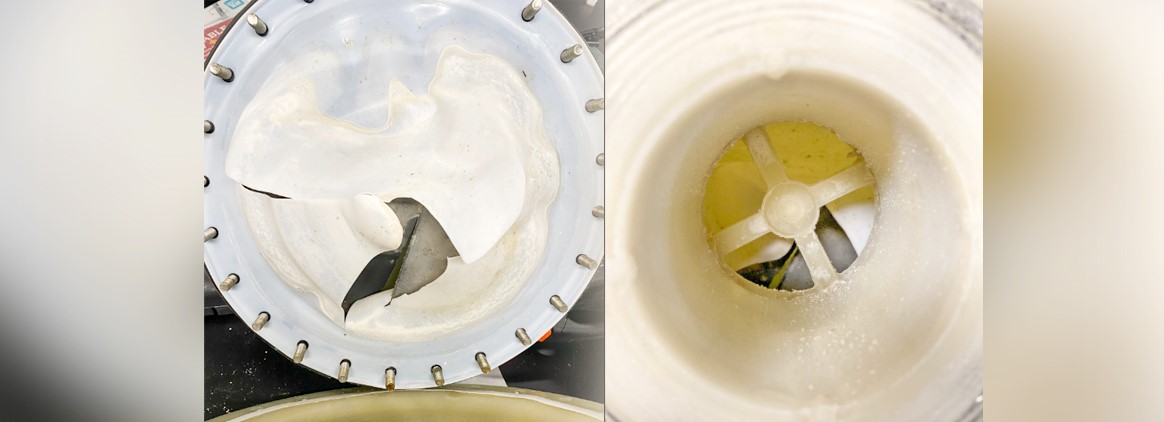
A large manufacturing facility was using a polypropylene 5 gallon unit equipped with a PTFE (Teflon) diaphragm for a chemical application. The diaphragm material was initially believed to be compatible with the process fluid, but over time the chemical slowly degraded the PTFE, leading to internal wear and eventual leakage.
As the material deterioration progressed, leakage began occurring through threaded connections. Temporary fixes such as taping the threads were attempted but ultimately failed as the chemical continued to attack the diaphragm material.
The repeated leaks created reliability concerns and highlighted a material compatibility issue that had not been identified during the original selection.
Solution:
The facility’s manufacturing engineer reached out for technical support to diagnose the failure. Through discussion and review of the application, the issue was identified as chemical incompatibility with the PTFE diaphragm, not a mechanical or installation problem.
While an on site visit was initially planned, access constraints delayed approval. In the meantime, the recommended corrective action was clearly defined: conversion to an EPDM bladder, which offers far better compatibility with the chemical in use.
To confirm the findings and installation details, the local distributor conducted an on site verification and validated the proposed solution. Based on this confirmation, a quote was issued to convert the unit from PTFE to EPDM.
Result:
The root cause of the leakage was identified and addressed without extended downtime or repeated trial and error fixes. By converting to an EPDM bladder:
• Chemical compatibility issues were resolved
• Ongoing diaphragm degradation and leakage were eliminated
• Temporary fixes were no longer required
• The system could return to reliable, long term operation
With the solution validated, the customer is now positioned to move forward not only with this conversion, but with additional conversion kits for similar units, avoiding repeat failures across the facility.